
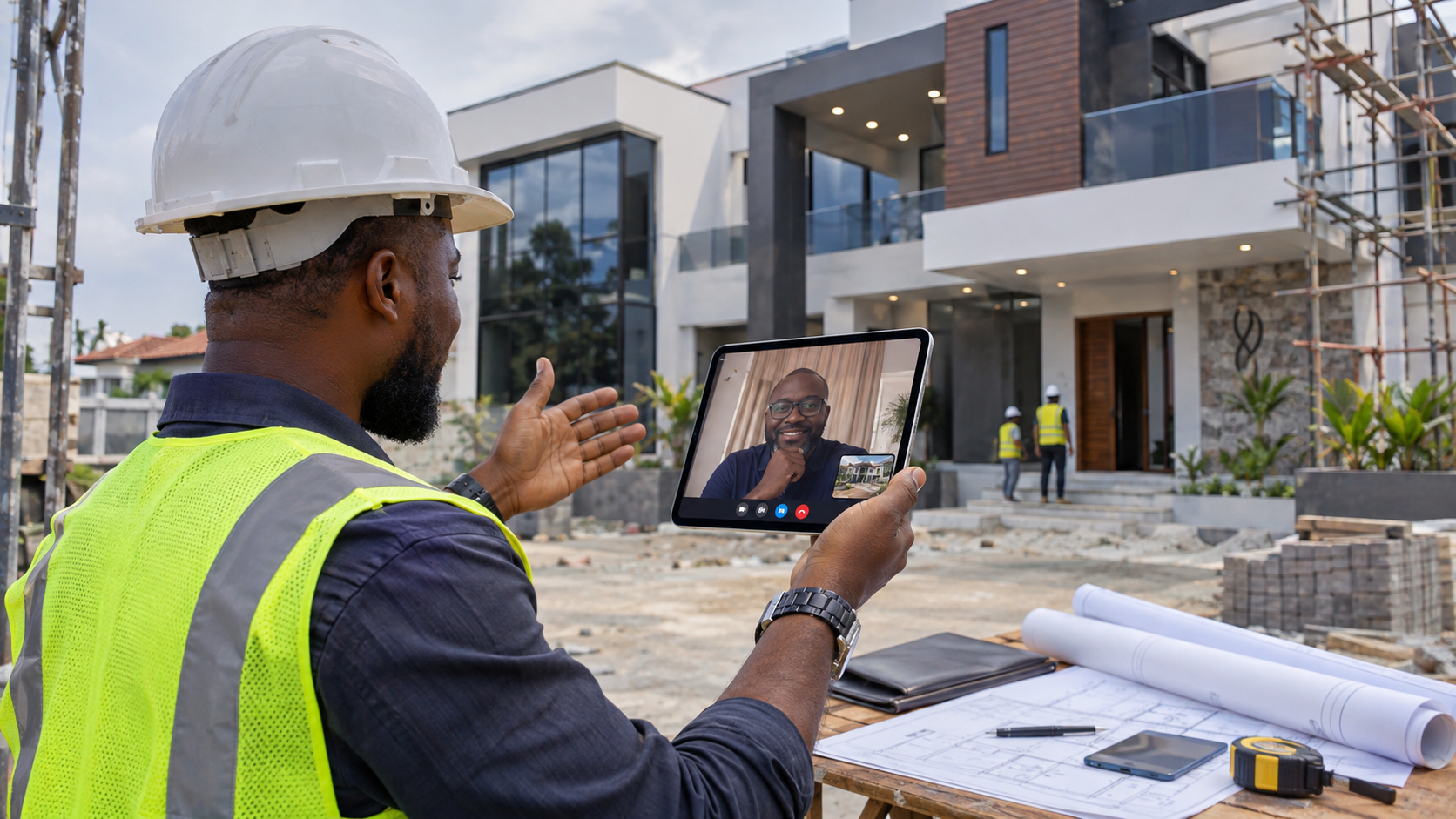
Building a house in Nigeria while living in the United Kingdom, United States, Canada or elsewhere is both a personal ambition and a substantial financial commitment. You may be investing in a family home in Awka, a retirement residence near Nnewi or a property development in Enugu. The difficult question is often not whether you can afford to start, but how you can remain confident about what happens to your money when you are thousands of kilometres away.
The answer is not to rely on daily video calls or the assurances of one trusted relative. It is to put a project structure in place: verified land information, documented designs, an agreed budget, professional responsibilities, evidence-based payments and regular independent checks. Here is how to protect your investment before and during construction.
1. Establish who owns the land—and what can legally be built
Before commissioning an elaborate house design, ask a qualified property lawyer to investigate the title, relevant search records, ownership history and any restrictions affecting the land. A licensed surveyor should confirm the boundaries, dimensions and access. This is particularly important when the property is inherited, jointly owned or purchased through an intermediary.
Land ownership does not itself amount to planning permission. Development approval and construction-stage requirements vary by state, location and type of building. Involve appropriate professionals to identify the relevant authority and obtain the necessary approvals before site works. Avoid transferring substantial construction funds while fundamental land and approval questions remain unresolved.
2. Begin with drawings, specifications and a realistic cost plan
A beautiful architectural impression is not a construction instruction. A dependable project requires coordinated drawings and a specification that defines what is to be built: foundation and structural requirements, roof system, electrical and plumbing provisions, windows, doors, finishes and external works. Ground investigation should inform foundation decisions where required by the engineer.
Ask for a cost plan or bill of quantities prepared to an appropriate level of detail. It should separate professional fees, construction works, statutory charges, provisional allowances and contingency. Discuss what is excluded. A quotation that covers only blocks, concrete and roofing can appear attractive while omitting significant costs that arrive later.
3. Choose an accountable delivery team, not a collection of informal promises
If you engage a contractor, establish its legal identity, relevant experience, key personnel and the specific services it will perform. Check examples of completed work and speak to references where possible. For professional engineering input, registration can be checked through the COREN practitioner verification service. Verify other relevant professionals through their respective regulators.
Decide who will act as the owner’s representative and who has authority to approve designs, instructions, procurement, payments and changes. If a relative serves as a local contact, define that person’s role and limits in writing. Family relationships are valuable, but they should not replace clear project governance.
4. Use a written contract with meaningful milestones
The contract should identify the site, parties, detailed scope, drawings, price basis, payment milestones, completion programme, responsibilities for approvals, insurance and safety, procedures for variations, dispute resolution and handover. A ‘turnkey’ promise is not enough unless the actual scope is written down.
Milestone payments should correspond to measurable progress, not simply calendar dates or urgent telephone requests. For example, an agreed foundation payment may be conditional on inspection and certification of the completed stage. The appropriate certification process depends on the contract and appointed professionals. Large advances should have a clear purpose, documentation and suitable protections.
5. Insist on a reporting system you can inspect remotely
Remote supervision works when information is consistent and verifiable. Agree the reporting frequency and format at the beginning. A useful progress report should include:
- Work completed during the reporting period, tied to the approved programme.
- Dated photographs and short videos from identifiable locations on the site.
- Key materials delivered, inspected and incorporated into the works.
- Approved expenditure, outstanding commitments and the next payment forecast.
- Quality or safety concerns, corrective actions and decisions required from the owner.
- The next activities and any likely effect on programme or cost.
Photos are helpful but insufficient by themselves. They should be supported by site records, inspection notes, delivery documentation and professional certification where appropriate. For important concealed work—such as reinforcement before concrete placement—request documented inspection before it is covered.
6. Control changes before they become expensive disputes
During construction you may wish to enlarge a room, change the roofing material or upgrade the floor finish. Each change can affect more than its immediate purchase price: it may alter structure, labour, procurement and programme. Require a written variation describing the change, cost effect and time effect before work proceeds, except for properly documented urgent safety measures.
A single written decision register can prevent the familiar disagreement over who authorised what. Where several family members are involved, appoint one recognised decision-maker so the team does not receive conflicting instructions.
7. Protect materials and cash flow
Clarify whether the contractor procures materials or whether the owner supplies them. If materials are paid for in advance, agree where they will be stored, who bears loss or damage risk, and how delivery and stock use will be verified. Request receipts or supplier documentation as required by the contract, and reconcile major payments with physical progress.
Do not assume that buying every material personally is automatically cheaper. Fragmented procurement may cause wrong specifications, inconsistent quality and delays. The better question is which procurement arrangement provides the clearest accountability and the best whole-project value.
8. Plan the completion process from the beginning
Completion is more than handing over a key. Agree the inspections, tests, snagging procedure, relevant approval documents, warranties, equipment information and outstanding-work arrangements expected at handover. Ask how defects identified after possession will be reported and addressed under the contract. This makes your investment easier to maintain and, where relevant, lease or sell.
Questions every diaspora owner should ask before sending the next payment
- What exactly has been completed against the approved drawings and programme?
- Who inspected the work, and what evidence is available?
- What milestone or contractual obligation triggers this payment?
- What remains to be spent, including known variations and provisional items?
- What decisions must I make before the next stage begins?
The Conifer approach: confidence without constant travel
At Conifer Konstruktion, we understand that owners building from abroad need more than reassuring messages. They need sound engineering, agreed reporting arrangements and clearly documented decisions. Our Client Commitment explains the standards we aim to bring to communication and accountability, while our How We Work page outlines our project process.
If you are planning a residential or investment project in Anambra or another location we can responsibly serve, request a project consultation early. Share your site location, intended scope, planning stage and preferred commencement period so we can assess the appropriate next step. You may also read our earlier article on building your dream home from abroad for broader planning considerations.
Professional note: This article provides general project-planning information, not legal, financial or engineering advice for a specific site. The featured visual is AI-generated and illustrative, not a photograph of a Conifer project.


Leave a Reply